




Choosing between a travel trailer and a fifth wheel can pose a challenge. Both options have a unique set of benefits and challenges, and understanding these can be key to making the best choice for your needs and lifestyle.
The choice between a travel trailer and a fifth wheel depends on factors such as budget, towing capacity, and the desired level of comfort and convenience for the journey ahead. Let's dig in to see how you can choose.
Travel trailer vs. fifth wheel at a glance
- Travel trailers hitch to a bumper or frame hitch, cost less, and can be towed by a wider range of vehicles, including many SUVs.
- Fifth wheels hitch into a pickup bed, ride steadier, and offer more living space — but they need a pickup with a fifth-wheel hitch.
- Hitch weight: plan on about 10–15% of a travel trailer's loaded weight on the hitch, and about 15–25% of a fifth wheel's on the kingpin.
- Riding inside a towed trailer is illegal in many states and unsafe in all of them.
- Not sure? Rent one of each before you buy — some owners will deliver and set it up for you.
The Long and Short Of It
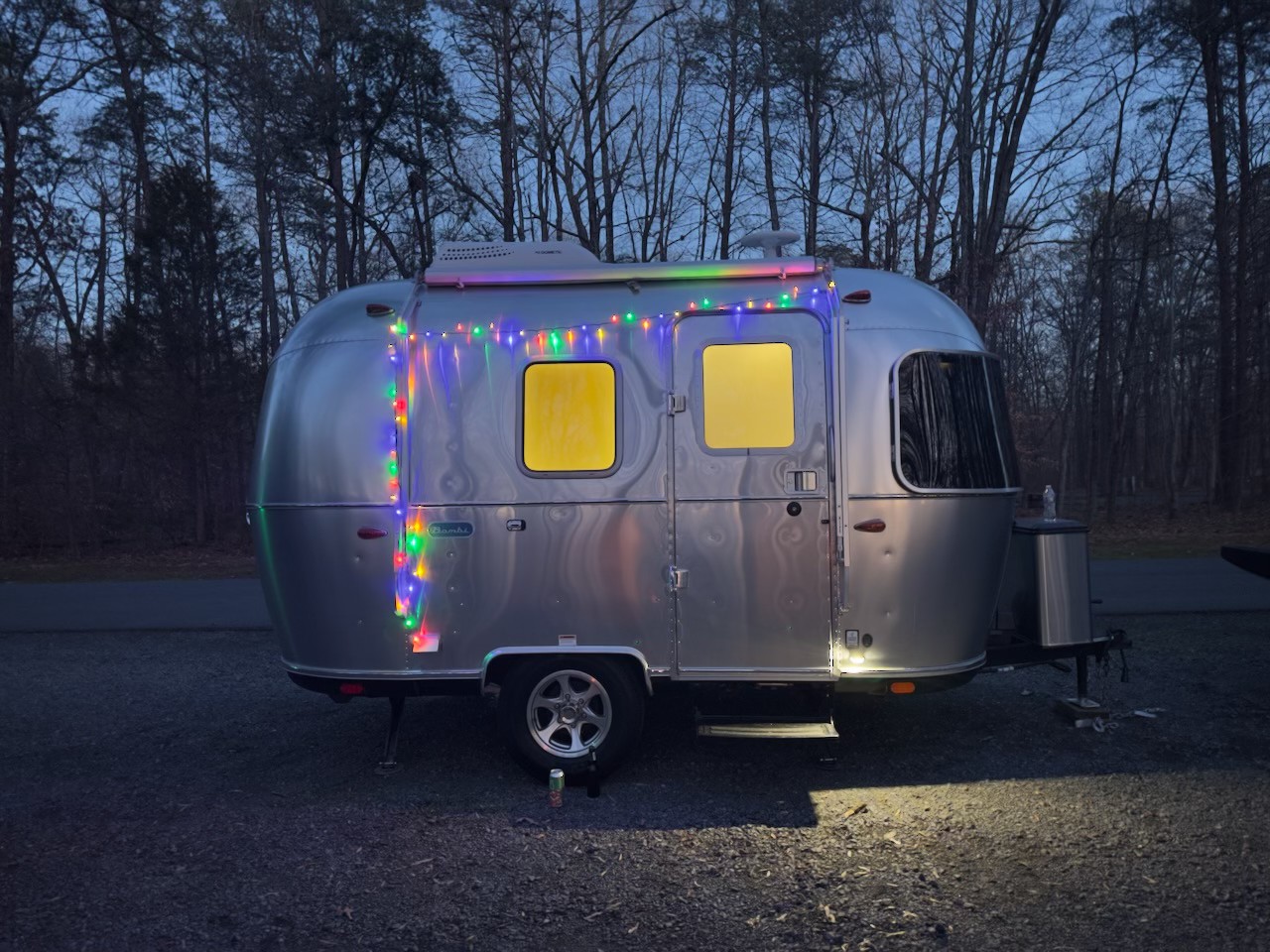
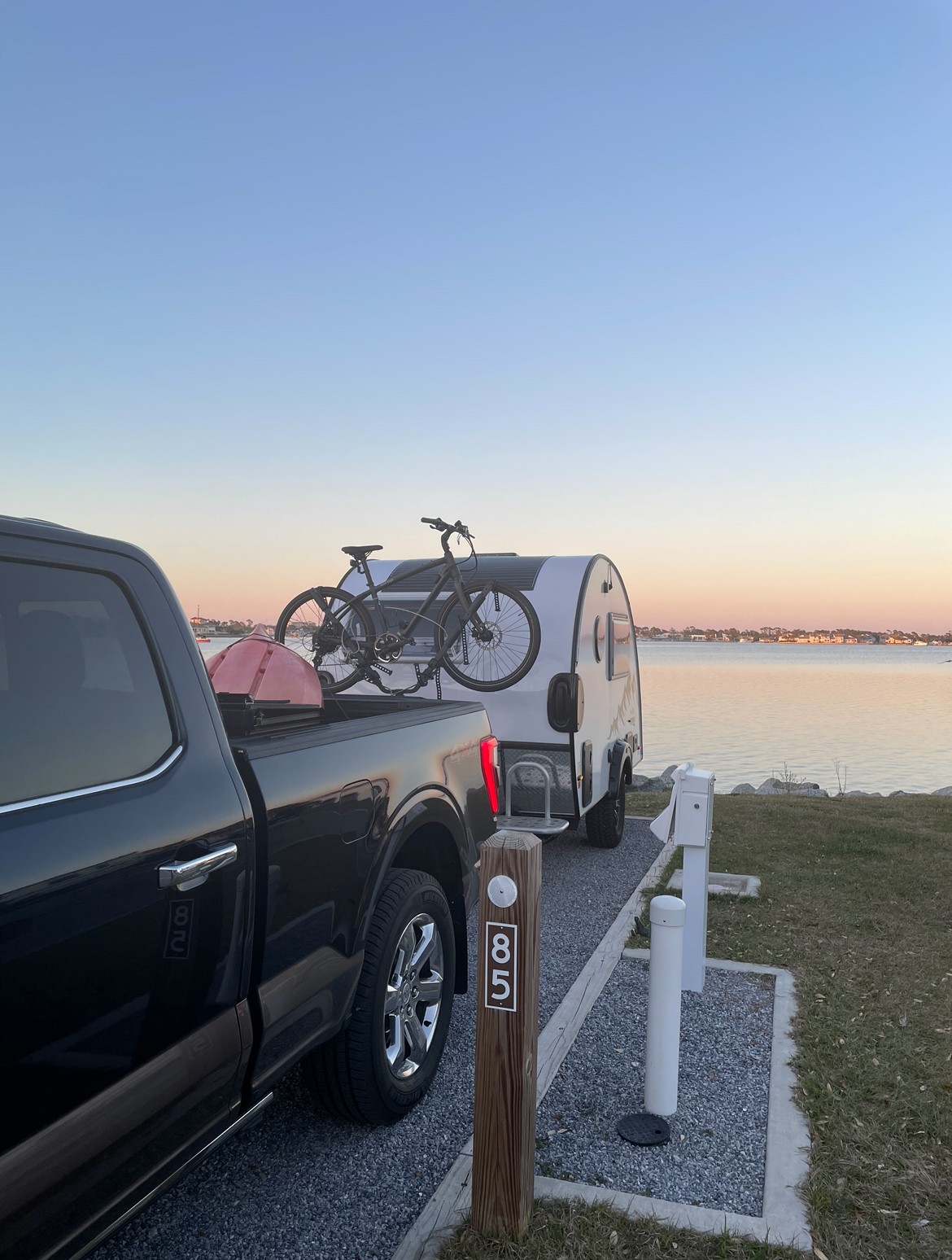
Travel trailers are a popular option for those seeking a more versatile and affordable RV experience. They are typically towed by a bumper hitch, making them compatible with a variety of tow vehicles. Travel trailers come in various sizes and layouts, offering flexibility for different camping scenarios.
Fifth wheels provide a more spacious and luxurious living space, as they typically have a raised front section that extends over the bed of the towing truck. This design allows for larger interiors and often includes amenities like multiple bedrooms and bathrooms. (Curious about the name? Here's why it's called a fifth wheel.)
Cost Comparison
Here are the various general costs to compare when exploring a travel trailer versus a fifth-wheel purchase:
Purchase Price:
- Travel Trailers: Generally more budget-friendly. The average new travel trailer costs about $20,000 to $35,000, with small models below that and large, feature-rich ones well above.
- Fifth Wheels: Tend to have a higher upfront cost. The average fifth wheel costs about $40,000 to $65,000, and luxury models can cost far more due to their larger size and additional amenities.
Towing Vehicle:
- Travel Trailers: Can be towed by a variety of vehicles, including SUVs and light trucks. Minimal need for a specialized tow vehicle, potentially saving on additional expenses.
- Fifth Wheels: Usually require a heavy-duty pickup truck with a fifth-wheel hitch, which may necessitate an additional investment in a suitable towing vehicle.
Maintenance Costs:
- Travel Trailers: Generally lower maintenance costs due to their smaller size and simpler systems.
- Fifth Wheels: Larger size and more complex layouts can result in higher maintenance costs, depending on factors such as age and overall condition.
Fuel:
- Travel Trailers: A lower profile means less wind resistance, which usually helps fuel economy.
- Fifth Wheels: A taller front cap and heavier weight typically mean more fuel per mile, and the tow vehicle is usually a bigger truck.
Resale Value:
- Travel Trailers: Generally depreciate faster than fifth wheels, leading to a potentially lower resale value over time.
- Fifth Wheels: Tend to hold their value better due to their higher-end features and amenities, resulting in a potentially higher resale value.
Insurance:
- Travel Trailers: Insurance premiums are usually lower due to the lower overall value and less specialized towing requirements.
- Fifth Wheels: Higher overall value and the need for a specific towing vehicle may result in higher insurance premiums.
It's important to note that these figures are approximate and can vary based on individual circumstances, location, and the specific make and model of the RV.
Towing Requirements
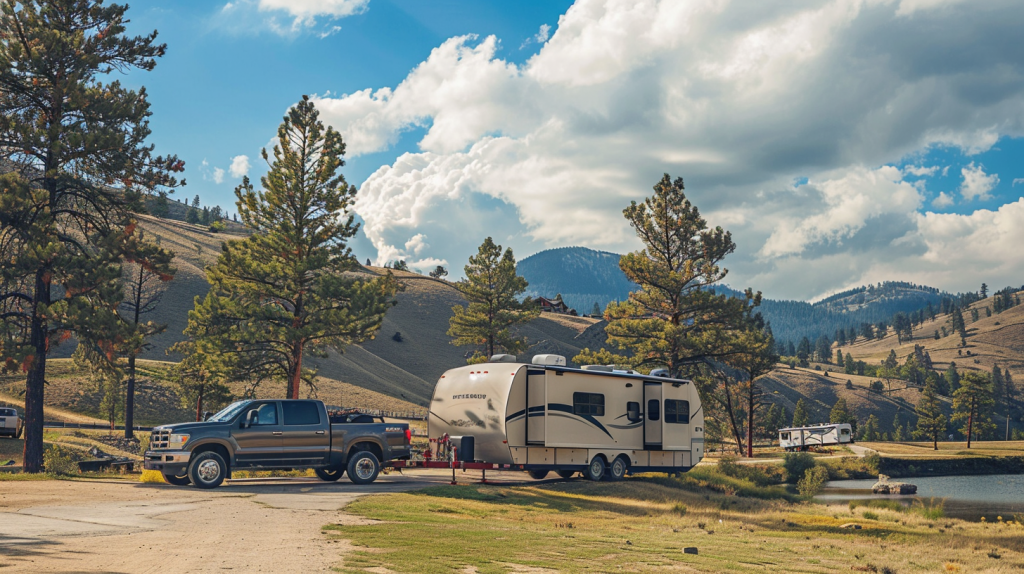
Another crucial consideration is the towing requirements. Depending on the size and weight of your trailer, you'll need a suitable vehicle to tow it. Many travel trailers can be towed by a 1/2-ton truck or a capable SUV, and the smallest ones by some midsize vehicles. Most fifth-wheel trailers need at least a 3/4-ton truck, though some lightweight models are built for half-ton pickups. Whatever you tow, check your vehicle's towing capacity and payload against the trailer's loaded weight, not its dry weight.
Check out these smaller fifth-wheel trailers that might not require a heavy-duty truck.
The difference in towing requirements is partly due to how each type of trailer distributes its weight. Fifth-wheel trailers typically put about 15% to 25% of their loaded weight on the kingpin, which connects the trailer to the truck bed — Ford's 2025 towing guide plans on 15% kingpin weight. In contrast, travel trailers need about 10% to 15% of their loaded weight on the bumper hitch, with 10% as the minimum.
- Travel trailers: about 10–15% of loaded weight on the hitch
- Fifth wheels: about 15–25% of loaded weight on the kingpin
This difference in weight distribution can affect not only the type of vehicle you need but also the overall towing experience. In our experience, first-time towers who weigh their loaded rig at a truck stop scale before a long trip catch payload problems that the spec sheet hides. Our guide to towing a travel trailer covers the basics.
Fifth wheels, however, often feel more akin to a home on wheels. They offer more living space with split-level designs, often including a separate master bedroom, and provide more storage space. The hitch design sits over the truck's rear axle, which makes fifth wheels more steady on the road, and many drivers find them more predictable in reverse — though their longer overall length can make tight campsites tricky.
However, fifth wheels do come with higher costs, not only in terms of purchase price but also maintenance. Their larger size and weight require a more powerful truck to tow, which can be a significant additional cost if you don't already own one. The higher profile of fifth wheels also makes them less fuel-efficient and more susceptible to wind resistance, and their height can rule out some low underpasses and older campground roads. Renters we talk to often say the stability is what sold them on a fifth wheel, and the truck bed they gave up is what they missed most.
To summarize:
Travel Trailers:
- Pros: More cost-effective, lightweight, versatile towing options.
- Cons: Less steady on the road, less living space.
Fifth Wheels:
- Pros: More living and storage space, more steady and easier to handle.
- Cons: More costly, require a pickup with a fifth-wheel hitch, less fuel-efficient, taller.
Can you ride in a fifth wheel while it's being towed?
Usually not, and you shouldn't, even where it's legal. Laws vary by state: a 2025 state-by-state roundup found that 34 states ban riding in at least one kind of towed RV trailer, and states that allow it usually attach conditions. California law, for example, allows passengers in a fifth-wheel trailer coach only if it has safety glass, a way to signal the driver, and an exit that opens from both inside and outside. Trailers aren't built to protect passengers in a crash, so everyone should ride buckled up in the tow vehicle — and no one should ever ride in a bumper-pull travel trailer.
How can you try a travel trailer or fifth wheel before you buy?
Rent one. A weekend in each type tells you more than any spec sheet: how the floor plan lives, how your family sleeps, and how comfortable you feel hitching, towing, and backing. If you don't own a capable truck — especially a pickup with a fifth-wheel hitch — look for listings that offer RV delivery, where the owner tows the trailer to your campsite and sets it up, usually for a distance-based fee. Browse travel trailer rentals to compare floor plans. We've watched plenty of would-be buyers change their minds after a single rental weekend, and that's money well spent before a five-figure purchase.
Wrapping Up
Choosing between a travel trailer and a fifth wheel is a decision that largely depends on your individual needs, lifestyle, and budget. While travel trailers offer cost-effectiveness and versatility, fifth wheels provide more living space and steadiness on the road.
In the end, the best choice will be the one that aligns with your travel plans, comfort requirements, and budget. Whether you pick the compact convenience of a travel trailer or the spacious luxury of a fifth wheel, both options pave the way to countless adventures on the open road.
About this guide
Originally written by Outdoorsy author Josh Schukman. Updated in November 2026 by Outdoorsy Editorial. Facts in this guide were checked against official and primary sources, linked throughout. Towing laws and ratings vary, so check your vehicle's owner's manual and your state's rules before you tow.